Surgery is considered when it is the right choice for you. Before your operation you will receive a Preparing for Surgery booklet and a detailed guide related to your specific procedure.
Overview
The rotator cuff is a group of four tendons that hold the ball of your shoulder (humerus) centered in the socket (glenoid) and let you lift and rotate the arm. Your rotator cuff has torn away from the bone. Repair means reattaching the torn tendon to its original location on the upper arm bone using small anchors placed in the bone with sutures running through the tendon. Augmentation of this repair is also sometimes done with a biologic patch or graft.
- Most people get significant pain relief. Around 9 in 10 patients reach a meaningful improvement in pain and function.
- Pain improves before strength does. Motion comes back over the first few months. Strength keeps building for 6 to 12 months.
- The tendon does not always heal but that does not mean the surgery failed. Most people who have a retear still end up considerably better than they started.
- This is a long project. A sling for several weeks, months of therapy and 6 to 12 months to reach your best result.
Technique
- Done arthroscopically, through several small incisions with a camera.
- The joint is inspected first, the torn tendon edges are cleaned of degenerated tissue and the bone where the tendon attaches is prepared so the tendon can heal to it.
- Anchors are placed into the bone and the sutures attached to them are passed through the tendon and tied, pulling the tendon back down onto its footprint.
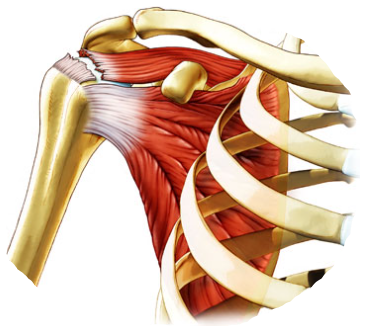
Torn rotator cuff
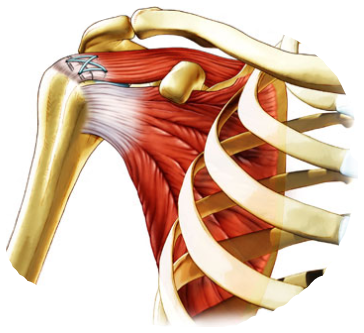
Repaired rotator cuff
Recovery
Getting Back to Activity
- Weeks 0-6Sling and protected motion
- Weeks 6-12Moving the arm on your own
- Months 3-4Building strength
- Months 4-6Overhead activity returns
- Months 6-12Back to sport and full strength
Recovery Milestones
- Sling: 3 to 6 weeks, depending on tear size.
- Desk work: 2 to 6 weeks.
- Moving the arm on your own: Around 6 weeks.
- Strengthening: Around 12 weeks.
- Physical work: About 8 months, on average.
- Sport: 6 to 9 months, for recreational athletes.
Your discharge instructions and therapy protocol cover each stage in detail.
For how this condition is diagnosed and every treatment option, including nonoperative care, read the full Rotator Cuff Tears guide.
Instructions and therapy protocols
Each version of this operation has its own post-op instructions and physical therapy protocol. Bring the protocol to your first therapy visit.
- Rotator Cuff RepairPost-op instructionsPT protocol
- Rotator Cuff Repair with Biceps TenodesisPost-op instructionsPT protocol
- Rotator Cuff Repair with Subscapularis RepairPost-op instructionsPT protocol
- Rotator Cuff Repair with Subscapularis Repair and Biceps TenodesisPost-op instructionsPT protocol
- Massive Rotator Cuff RepairPost-op instructionsPT protocol
- Massive Rotator Cuff Repair with Biceps TenodesisPost-op instructionsPT protocol
- Massive Rotator Cuff Repair with Subscapularis Repair and Biceps TenodesisPost-op instructionsPT protocol
- Lower Trapezius Tendon TransferPost-op instructionsPT protocol
- Biceps TenodesisPost-op instructionsPT protocol