What Is Plantar Fasciitis?
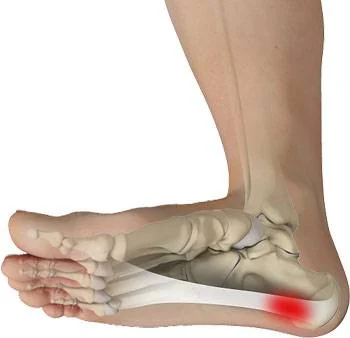
Plantar fasciitis is pain where the plantar fascia attaches to the heel bone. The plantar fascia is a thick band of tissue along the bottom of the foot. It runs from the heel to the toes and supports the arch.
It is among the most common causes of heel pain. It often starts after a jump in activity such as more walking, running or time on your feet. It is most common between about 40 and 60 years of age and in women more than men.
Why It Happens
A tight calf is one of the strongest risk factors. The calf muscles connect to the heel through the Achilles tendon. When they are tight they put extra strain on the plantar fascia with every step. This is why stretching the calf is a core part of treatment.
Common Symptoms
- Pain with the first steps in the morning or after sitting for a while
- Pain on the bottom of the heel toward the inner side
- The pain often eases after a few minutes of walking. It can build again later in the day or after long periods on your feet.
- The plantar fascia may tighten overnight when the foot is commonly resting in a position that is pointed down. The first steps in the morning often place a stretch on the plantar fascia, which is why it often hurts at that time.
How It Is Diagnosed
- A history of your symptoms and a physical examination
- We check for tenderness where the plantar fascia attaches to the heel and for a tight calf
- An X-ray may be performed to rule out other causes of heel pain
- An ultrasound or MRI is usually only needed if the heel is not improving as expected
When Heel Pain Is Something Else
Other problems can cause heel pain and may look similar at first:
- A stress fracture of the heel bone. The pain is typically in a different location than the bottom of the heel.
- Irritation of a nerve near the heel such as tarsal tunnel syndrome. This can cause burning, tingling or numbness.
- Achilles tendonitis. The pain is at the back of the heel rather than the bottom.
- Inflammatory arthritis. Pain in both heels at the same time may need further evaluation.
Your Treatment Options
Most people get better with simple home treatment, but it often takes months. About 8 in 10 improve within a year.
First-Line Treatment
Stretching the calf is the most important treatment. A home exercise program includes calf stretching and foot and ankle motion and strengthening. Do your calf stretches every day.
Other things that help:
Keep stretching consistently even when the heel starts to feel better. The calf takes time to become more flexible.
If the Pain Is Not Improving
If the heel has not improved after 3-6 months of first-line treatment, other options may be considered.
A platelet-rich plasma (PRP) injection uses a concentrate of your own blood. It is often given after a round of shockwave therapy. A walking boot is worn for about 2 weeks afterward, then physical therapy resumes. It can be expensive and is often not covered by insurance.
Tenex is a minimally invasive procedure for pain that does not improve. It uses ultrasound guidance to remove damaged tissue through a very small incision.
We typically avoid steroid injections for plantar fasciitis because of the risk of the plantar fascia tearing (rupture). They can also cause thinning of the fat pad that cushions the heel.
What to Expect
Tips That Help
- Wear supportive shoes or sandals at home while symptoms are aggravated to avoid walking barefoot
- Cut back for a while on the activity that brings on the pain such as running or long hours standing
- Low-impact exercise such as cycling or swimming keeps you fit while the heel settles
Selected Background Sources
The guidance in this handout reflects current peer-reviewed orthopedic literature and professional society recommendations. Selected sources include:
- American Academy of Orthopaedic Surgeons. Plantar Fasciitis and Bone Spurs. OrthoInfo.
- Trojian T, Tucker AK. Plantar fasciitis. Am Fam Physician. 2019.
- Koc TA, et al. Heel pain - plantar fasciitis: revision 2023. J Orthop Sports Phys Ther. 2023.
- Hansen L, et al. Long-term prognosis of plantar fasciitis: a 5- to 15-year follow-up study of 174 patients with ultrasound examination. Orthop J Sports Med. 2018.
- Riddle DL, et al. Risk factors for plantar fasciitis: a matched case-control study. J Bone Joint Surg Am. 2003.
- DiGiovanni BF, et al. Tissue-specific plantar fascia-stretching exercise enhances outcomes in patients with chronic heel pain. J Bone Joint Surg Am. 2003.
- Whittaker GA, et al. Foot orthoses for plantar heel pain: a systematic review and meta-analysis. Br J Sports Med. 2018.
- Gollwitzer H, et al. Clinically relevant effectiveness of focused extracorporeal shock wave therapy in the treatment of chronic plantar fasciitis. J Bone Joint Surg Am. 2015.
- Hohmann E, et al. Platelet-rich plasma versus corticosteroids for the treatment of plantar fasciitis: a systematic review and meta-analysis. Am J Sports Med. 2021.
- Acevedo JI, Beskin JL. Complications of plantar fascia rupture associated with corticosteroid injection. Foot Ankle Int. 1998.
This handout is for education and does not replace the discussion with your surgeon. Numbers come from specific studies, may not apply to you and do not guarantee any result. Ask Dr. Tummala about anything that applies to your specific foot.
Care in the East Bay
Dr. Sai Tummala treats plantar fasciitis at Stanford Health Care Emeryville, near the east end of the Bay Bridge, for patients from Oakland, Berkeley, San Francisco and across the East Bay. Request an appointment or call 510-974-2800.
Handouts for this condition
- Condition guideThe printable version of this pageOpen PDF